

Choosing between a tank and tankless water heater comes down to more than price. Both systems provide reliable hot water, but they differ in energy efficiency, operating costs, and everyday performance. The right choice depends on your household’s needs and your home’s plumbing setup.
For Maryland homeowners, colder winters and daily hot water demands can influence which system works best. Whether you’re replacing an aging water heater or considering an upgrade, understanding these differences can help you make a confident investment.
How Do Tank and Tankless Water Heaters Work?
Traditional tank water heaters store heated water in an insulated tank, typically holding 30 to 80 gallons. The system maintains that water at a preset temperature, so it’s ready whenever you need it. Once the stored supply runs low, you’ll need to wait for the tank to heat more water.
Tankless water heaters work differently by heating water on demand as it flows through the unit. Because there’s no storage tank, you aren’t limited to a fixed supply of heated water. However, the system can only heat a certain amount at once, making proper sizing essential for households with higher hot water demands.
Tank vs. Tankless Water Heaters: Key Differences
Both systems have advantages, but their differences can affect your comfort, utility expenses, and long-term investment. Comparing their main features can help you determine which option better fits your household.
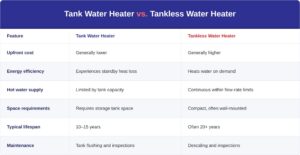
A traditional system may be more practical if you’re looking for an affordable replacement, while tankless models can offer greater efficiency and a longer potential lifespan. However, the best choice depends on how these advantages align with your budget and daily hot water needs.
Which Water Heater Is More Energy Efficient?
Tankless water heaters are generally more energy efficient because they heat water only when needed. Traditional tanks continuously maintain stored water at a set temperature, resulting in standby heat loss even when you’re not using hot water.
According to the U.S. Department of Energy, tankless systems can be 24% to 34% more energy efficient than conventional storage water heaters in homes using 41 gallons or less of hot water daily. However, your actual savings depend on your fuel source, equipment efficiency, and household usage.
Maryland’s colder winters can also affect performance. As incoming water temperatures drop, your system must use more energy to reach your desired temperature. For tankless units, this can reduce the available hot water flow rate, particularly when multiple showers or appliances run simultaneously.
If energy savings are a priority, it’s worth comparing the efficiency ratings and operating costs of different models. A professional assessment can also help determine whether your preferred system can meet your household’s needs throughout the year.
How Much Does Water Heater Installation Cost?
Traditional tank water heaters generally cost less to purchase and install, especially when you’re replacing an existing unit with a similar model. If your current plumbing connections, fuel supply, and venting are compatible, installation may require fewer modifications.
Tankless systems typically involve higher upfront costs because switching from a traditional tank may require changes to your home’s infrastructure. Depending on your existing setup, installation may involve:
- Upgrading gas supply lines
- Modifying exhaust venting
- Increasing electrical capacity
- Adjusting plumbing connections
Not every home requires these modifications, but they can affect the total installation expense. Necessary safety improvements or updated connections can also influence the cost of a traditional replacement.
Although tankless systems may reduce energy expenses over time, those savings won’t necessarily offset the higher installation cost. Comparing professional estimates can help you evaluate the overall investment and choose a system that fits your budget.
Which System Provides Better Hot Water Performance?
Your household’s daily hot water usage plays an important role in determining which system will perform best. If multiple people shower in the morning or several appliances use hot water simultaneously, your water heater needs to accommodate that demand.
Traditional tank systems provide a stored supply that can serve several fixtures at once. However, once that supply runs low, you’ll need to wait for the tank to recover. The amount of available hot water depends on the tank’s capacity and heating performance.
Tankless systems provide continuous heating, but their output is limited by flow rate, measured in gallons per minute (GPM). If the combined demand from your fixtures exceeds that capacity, you may experience reduced water temperatures or flow.
Understanding your peak hot water usage helps ensure you aren’t paying for unnecessary capacity or choosing equipment that struggles to keep up. A properly sized system should accommodate your household’s busiest periods without frequent interruptions.
How Long Do Tank and Tankless Water Heaters Last?
Traditional tank water heaters commonly last 10 to 15 years, while tankless systems can often last 20 years or longer with proper maintenance. However, actual longevity depends on installation quality, water conditions, and daily usage.
Both systems require routine care, although their maintenance needs differ. Tank water heaters benefit from periodic flushing to manage sediment and inspections to identify corrosion. Tankless systems require cleaning and descaling to prevent mineral deposits from affecting the heat exchanger.
Maryland’s water quality can also influence maintenance requirements. Homes with harder water may experience greater mineral buildup, potentially affecting heating performance and equipment longevity. Water testing can help determine whether additional maintenance or treatment would benefit your system.
Keeping up with manufacturer-recommended service helps protect your investment and reduce the likelihood of unexpected repairs. Regardless of which water heater you choose, regular maintenance plays an important role in maintaining dependable performance.
Which Water Heater Is Right for Your Maryland Home?
Choosing the right water heater means balancing your immediate needs with your long-term priorities. Your existing system’s performance can provide a useful starting point, but changes in household size or hot water usage may influence your decision.
When to Choose a Traditional Tank Water Heater
Traditional tank systems remain a practical choice for homeowners who want familiar operation and a relatively simple replacement. If your current system provides enough hot water, there may be little reason to change technologies.
A traditional tank water heater may suit your home if you:
- Want a lower upfront investment
- Have room for a storage tank
- Are satisfied with your current hot water capacity
- Prefer a straightforward replacement
When to Choose a Tankless Water Heater
Tankless systems can appeal to homeowners planning upgrades or looking for a more compact alternative. Their longer potential lifespan may also be attractive if you’re planning to remain in your home for many years.
A tankless water heater may be worth considering if you:
- Want to reduce energy consumption
- Plan to stay in your home long-term
- Frequently run out of stored hot water
- Need additional utility room space
While both options have advantages, your household’s hot water needs should guide your final decision. A professional evaluation can help you compare available systems based on your home’s existing setup.
What Should You Check Before Water Heater Installation?
Your home’s existing infrastructure can influence which water heater is suitable and how much installation will cost. Fuel supply, venting, electrical capacity, available space, and plumbing connections all need to be considered before replacing your equipment.
Gas-powered systems require appropriate venting and fuel supply, while certain electric models may need electrical upgrades. Installation areas must also provide sufficient clearance and access for maintenance.
Maryland water heater installations must comply with applicable plumbing, building, mechanical, and electrical requirements. Depending on your location and project scope, permits or inspections may be necessary. Professional installation helps ensure your equipment is correctly sized, safely connected, and installed according to manufacturer specifications.
Find the Right Water Heater for Your Maryland Home With Clovis Plumbing
Both tank and tankless water heaters can provide dependable performance when they’re properly selected, installed, and maintained. Your budget, household hot water demands, and energy goals will help determine which option makes the most sense.
Clovis Plumbing understands how important reliable hot water is to your daily routine. Whether you’re replacing an aging unit or considering an upgrade, we’re here to discuss your plumbing needs and help you explore your options.
Ready to find the right water heater for your home? Contact Clovis Plumbing today to discuss your options and take the next step toward dependable hot water.